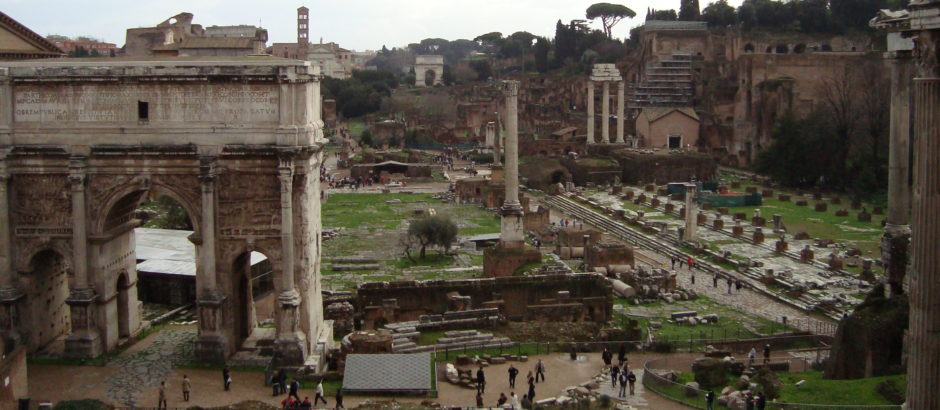
It’s always tempting to resist change. If things could only remain the same, and we could continue in the same comfortable old patterns, life would be good. And yet, inevitably, life and work, patterns and endeavours must change. How we adapt to and deal with the changes is a great determiner of success. This is the lesson that Aeneas must learn in the third book of Vergil’s Aeneid, as he struggles to lead the Trojan refugees to a new home out of the wreckage of the old.
Among the mistakes and setbacks of book 3, we find attempts to recreate, exactly, the original and lost Troy. The Trojans want what they had before, and nothing else. And so they try, repeatedly, to build “a new Troy”, instead of a new life. These attempts, predictably, lead to disappointment and failure, because it is impossible to move ahead while adhering to the past.
Aeneas sets out upon his journey with a mindset that must lead to failure: he actively seeks to rebuild and maintain exactly what he and his people had before. To this end he asks the gods to preserve “a second Troy” (Aeneid 3.86-87). He wants what he had before, and his efforts and attention are directed to that goal. The first real attempt to recreate the exact conditions of the past occurs when Aeneas and his team land at Crete. When they land there, Aeneas immediately sets about building a city, which he calls Pergamea: “Therefore I eagerly raise up the walls of the city we have longed for, and I call it Pergamea, and I urge the happy people to love their homes and raise a citadel for their houses.” (Aeneid 3.132-134) The name, of course, is the problem: in paying homage to their home city by naming the new after it, Aeneas is trying to create the future from the past. The people are expected, and urged, to find comfort and happiness in this re-created home. And so they all attempt to move forward, creating new farms and new families: “the young people were occupied with marriages and new fields.”(Aeneid 3.136) The joy of the Trojans in recreating their lost home in a new location is soon destroyed, as a drought and plague hit them: When suddenly a wasting illness and a death-bearing year / comes upon our limbs from a corrupt corner of the sky, / and on the trees and crops. / The people leave their sweets spirits, or drag their sickly bodies about. / Then Sirius scorches the lifeless fields, / and the grass burns, and the poisoned soils denies us crops. (Aeneid 3.137-142).
Aeneas’ father Anchises suggests retreating, going back across the sea to the oracle of Apollo. Fortunately, the Trojan Penates speak to Aeneas in a dream and direct him to keep moving forward, keep moving westward, keep moving to Italy. Only thus will they recover from this disaster. The epic presents this disaster as the result of misinterpretation of the divine will, and gods using extreme measures to correct the course. But we can put it into more human terms? The plague and drought which afflict the Trojans at their new city of Pergamea reflect the problems caused by attempting to cling to a past that has passed. When we move on from something that is lost, we cannot recreate it faithfully and exactly, and expect to carry on as if nothing has really changed at all. Nor can we continue with the same old conditions and habits and expect to progress. Because of this basic fact, the laws and farms and families that the Trojans have embarked upon at Crete are violently halted in their tracks. They cannot progress, and yet cannot return to their starting point. They must move forward